
How to Track Competitor Pricing Changes Automatically
SiteChangeTracker Team
Website Monitoring Experts
The Price Monitoring Challenge
In today's hyper-competitive e-commerce environment, pricing can make or break your business. Customers have unprecedented access to price comparison tools, and a single click can take them from your store to a competitor's. Yet, many businesses still rely on manual price checking—a practice that's both inefficient and increasingly ineffective.
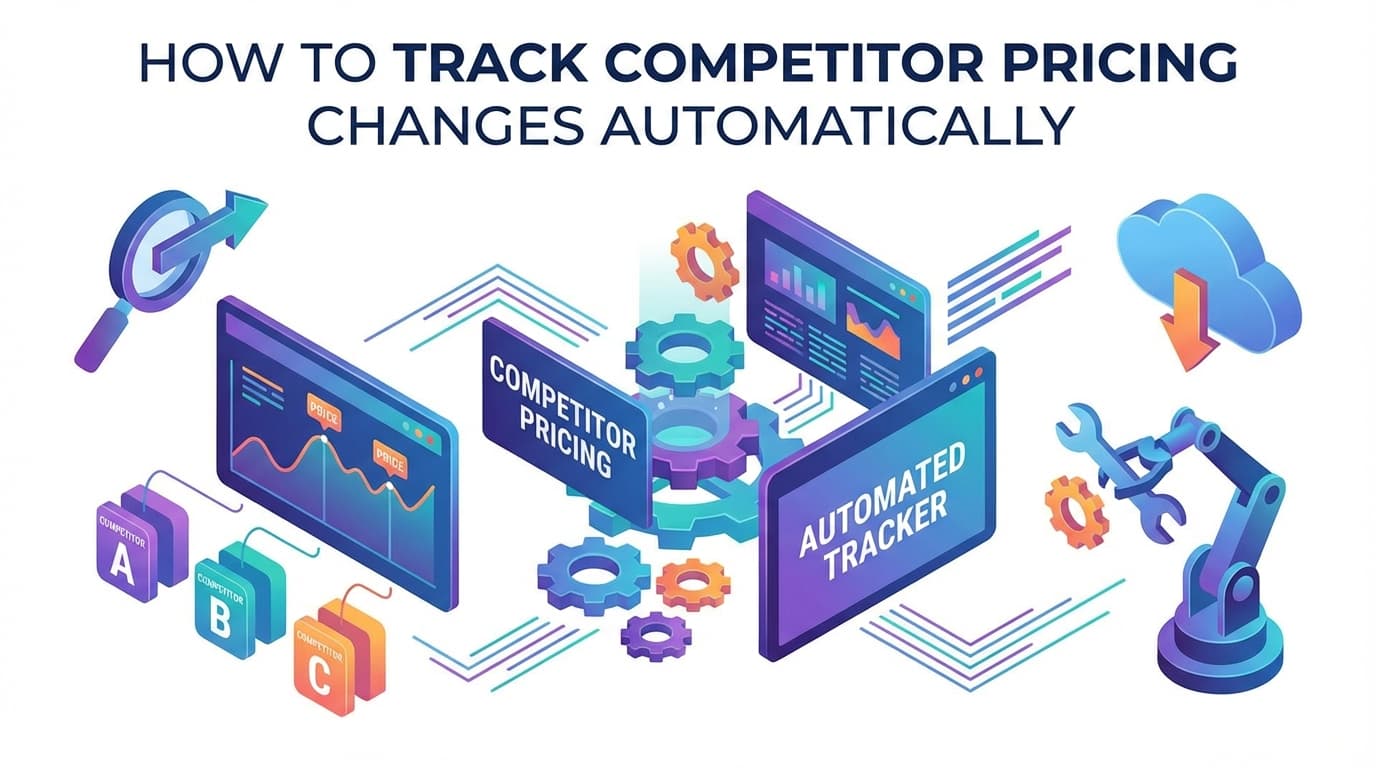
Automated price tracking solves this problem by continuously monitoring competitor pricing and alerting you to changes in real-time. This guide walks you through setting up an effective price monitoring system.

Why Automated Price Tracking Matters
The Speed Advantage
When a competitor drops their price, every hour you remain unaware costs you potential sales. Research indicates that price-sensitive customers will abandon a purchase if they find a better deal elsewhere. Automated tracking ensures you know about price changes within minutes, not days.
Consistency and Accuracy
Manual price checking is prone to human error. You might miss a temporary promotion, overlook a bundle discount, or simply forget to check certain products. Automated systems monitor consistently, accurately recording every change.
Historical Price Data
Beyond real-time alerts, automated tracking builds a valuable database of pricing history. This data reveals patterns in competitor behaviour, helping you predict future pricing moves and plan your own strategy accordingly.
Setting Up Your Price Monitoring System
Step 1: Identify Products to Monitor
Start with your most important products—those that drive the majority of your revenue or face the most direct competition. Create a prioritised list considering:
- High-margin products where pricing flexibility exists
- High-volume products where small price differences significantly impact sales
- Products facing direct competition with identical or very similar alternatives
- New products where market pricing hasn't stabilised
Step 2: Map Your Competitor Landscape
Identify which competitors to monitor for each product. Consider:
- Direct competitors selling identical products
- Large marketplaces (Amazon, eBay) where pricing tends to be aggressive
- Specialised retailers who may target the same customer segments
- Regional competitors in your key markets
Step 3: Configure Monitoring Frequency
Different products require different monitoring frequencies:
- Fast-moving categories (electronics, fashion): Monitor every few hours
- Stable categories (home goods, speciality items): Daily monitoring suffices
- Seasonal products: Increase frequency during peak seasons
Step 4: Set Alert Thresholds
Avoid alert fatigue by configuring meaningful thresholds:
- Price drops below a specific percentage (e.g., 5% or more)
- Prices falling below your cost price
- Competitor prices matching your promotional pricing
- Stock availability changes (out-of-stock to in-stock)
Best Practices for Price Response
Don't Always Match
Receiving a price drop alert doesn't mean you must immediately match. Consider:
- Your margin requirements and profitability goals
- The competitor's likely strategy (clearance sale vs. permanent reduction)
- Your unique value propositions that justify premium pricing
- The overall market context
Analyse Before Acting
Use your historical data to understand the context:
- Is this a temporary promotion or a strategic repositioning?
- Has this competitor shown similar behaviour before?
- What's the trend across multiple competitors?
Create Response Protocols
Establish clear guidelines for different scenarios:
- Minor price drops (1-5%): Monitor but don't immediately react
- Significant drops (5-15%): Evaluate and consider matching on key products
- Major drops (15%+): Investigate immediately—could indicate clearance or market shift
Advanced Price Tracking Strategies
Monitor Price Plus Shipping
Total cost matters more than product price alone. Ensure your tracking captures shipping costs where possible, as competitors may lower product prices whilst increasing shipping fees.
Track Bundle and Promotion Pricing
Watch for bundled offers, quantity discounts, and promotional pricing that may not appear in standard product listings.
Include Marketplace Fees
When comparing marketplace prices, account for platform fees to understand true competitor margins.
Measuring Success
Track these metrics to evaluate your price monitoring effectiveness:
- Response time: How quickly do you typically respond to competitor changes?
- Price position: Where do you rank in pricing for key products?
- Win rate: For products you price match, how does conversion change?
- Margin impact: How has automated tracking affected your overall margins?
Common Pitfalls to Avoid
Racing to the Bottom
Automated tracking makes rapid price matching easy, but constantly undercutting competitors erodes margins for everyone. Use data strategically rather than reactively.
Ignoring Non-Price Factors
Price is important, but it's not everything. Ensure your strategy accounts for service quality, delivery speed, and brand value.
Over-Monitoring
Tracking too many products or too many competitors creates noise that obscures meaningful signals. Focus your monitoring on what matters most.
Taking the Next Step
Effective price monitoring requires the right tools and processes. Modern website monitoring solutions can track competitor pricing pages, detect changes automatically, and alert you through multiple channels—email, Slack, SMS, or API integration with your pricing systems.
The investment in automated price tracking typically pays for itself many times over through improved pricing decisions and faster market response. Start with your most critical products and expand your monitoring as you develop expertise.
Ready to Monitor Your Competitors?
Start tracking competitor websites today with SiteChangeTracker. Get instant alerts when prices change, features launch, or content updates—all automatically.
No credit card required • Cancel anytime