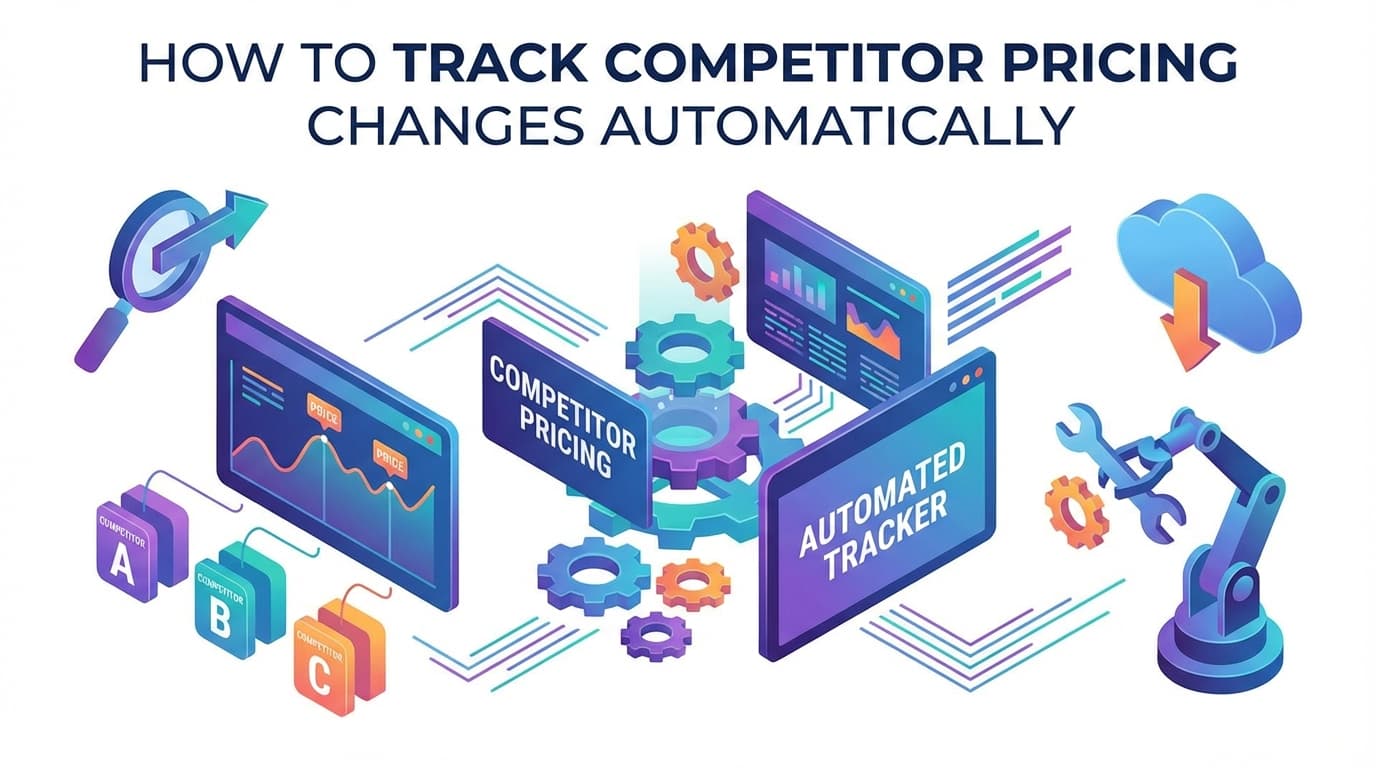
How to Monitor Terms of Service and Legal Page Changes
SiteChangeTracker Team
Website Monitoring Experts
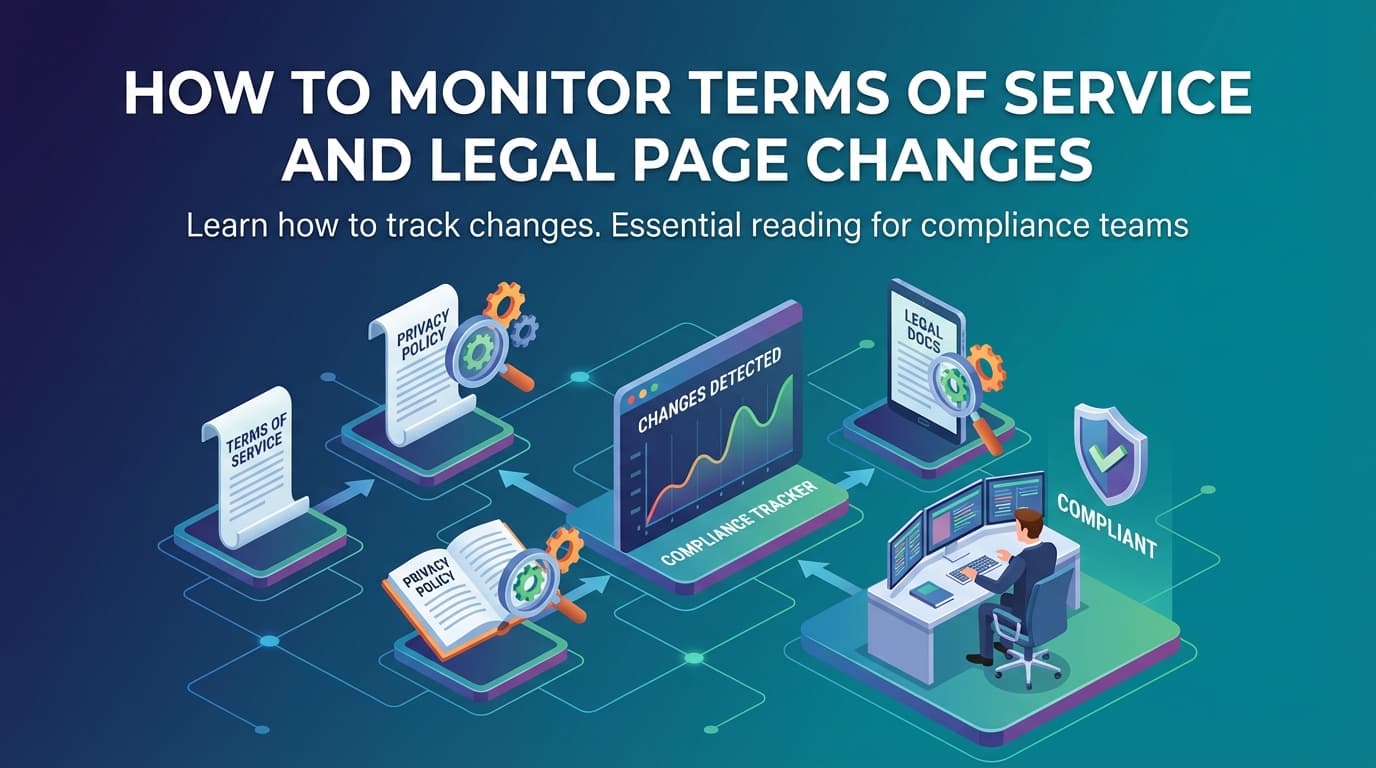
Why Legal Document Monitoring Matters
Terms of service, privacy policies, and other legal documents govern your relationships with vendors, partners, and service providers. When these documents change, your rights and obligations may change with them.
Yet most organisations have no systematic way to track these changes. A vendor might modify their data handling practices, alter liability terms, or adjust pricing structures—all buried in a terms of service update that nobody notices.
Automated monitoring solves this problem by alerting you whenever legal documents change, enabling timely review and response.
Who Needs Legal Document Monitoring
Legal and Compliance Teams
- Track regulatory document changes affecting your industry
- Monitor vendor contract and terms modifications
- Ensure ongoing compliance with changing standards
- Maintain documentation for audits
Procurement and Vendor Management
- Detect vendor terms changes before renewal
- Identify unfavourable modifications requiring negotiation
- Ensure SLA and contract alignment
- Track pricing and fee structure changes
Privacy and Data Protection Officers
- Monitor privacy policies of data processors
- Track changes in data handling disclosures
- Ensure ongoing GDPR/CCPA compliance
- Document data flow changes
Risk Management
- Identify liability and indemnification changes
- Track force majeure and termination clauses
- Monitor intellectual property terms
- Assess changing risk exposure
What Documents to Monitor
Vendor and Supplier Terms
For every significant vendor relationship, monitor:
- Terms of service / Terms of use
- Service level agreements (SLAs)
- Data processing agreements (DPAs)
- Privacy policies
- Acceptable use policies
Platform and Service Agreements
If you use major platforms, track:
- Cloud service terms (AWS, Google Cloud, Azure)
- SaaS application agreements
- API and developer terms
- Marketplace seller agreements
- Advertising platform policies
Regulatory and Industry Documents
Monitor relevant regulatory sources:
- Government agency guidance documents
- Industry standards and frameworks
- Professional body requirements
- Trade association guidelines
Competitor Legal Documents
Understanding competitor terms can inform your own:
- Privacy policy approaches
- Terms and liability structures
- Cancellation and refund policies
- Data handling disclosures
Setting Up Effective Monitoring
Text-Based Monitoring is Essential
For legal documents, text-based monitoring (rather than visual) is critical because:
- Every word matters legally
- Layout changes are irrelevant
- Precise tracking of additions and deletions is needed
- Diff comparisons show exact changes
Configure Comprehensive Alerts
Legal documents don't change frequently, but when they do, timely awareness is critical:
- Alert immediately on any text change
- Include document section in alerts if possible
- Route to legal/compliance personnel
- Create audit trail of all changes
Archive Previous Versions
Maintain historical archives of legal documents:
- Proves what terms were in effect at any time
- Essential for dispute resolution
- Supports audit requirements
- Enables trend analysis
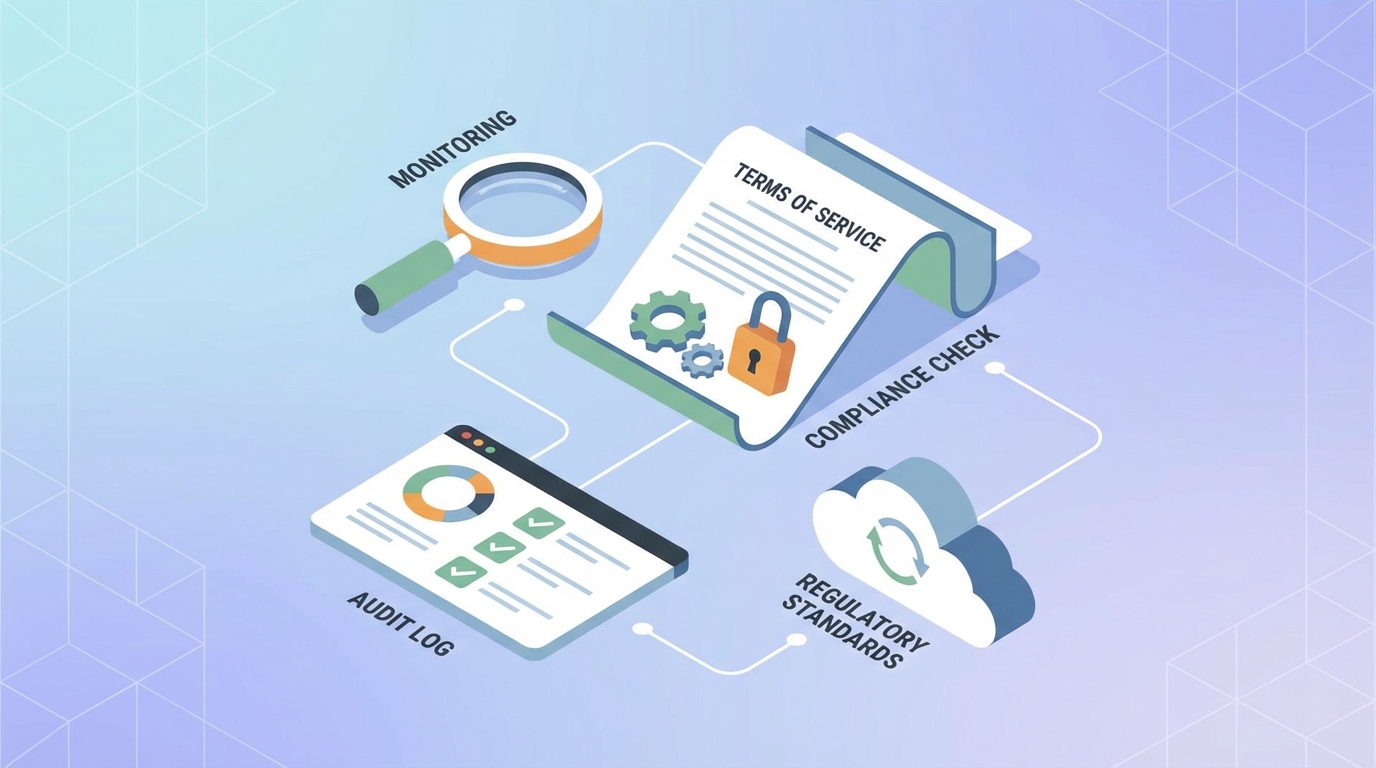
Analysing Legal Document Changes
Initial Triage
When a change is detected: 1. Identify what sections changed 2. Assess the nature of changes (clarification vs substantive) 3. Determine urgency of review 4. Route to appropriate reviewer
Legal Review Framework
Evaluate changes against key concerns:
Rights and obligations: Do the changes affect what you can or must do?
Liability and indemnification: Has risk allocation shifted?
Data and privacy: Are there new data handling practices?
Pricing and fees: Have commercial terms changed?
Termination and renewal: Have exit conditions changed?
Response Options
Depending on the analysis:
- Accept: Change is benign or beneficial
- Negotiate: Change is problematic but discussable
- Exit: Change is unacceptable and triggers termination rights
- Document: Change requires internal process adjustment
Compliance Documentation
Audit Trail Requirements
Maintain comprehensive records:
- Date and time of each detected change
- Full text of previous and current versions
- Internal review notes and decisions
- Actions taken in response
Version Control
Implement systematic version control:
- Archive every detected version
- Tag versions with effective dates
- Maintain easy comparison capability
- Integrate with document management systems
Reporting
Generate regular reports:
- Summary of documents monitored
- Changes detected in reporting period
- Reviews completed and outcomes
- Recommended process improvements
Industry-Specific Considerations
Financial Services
- Focus on regulatory guidance documents
- Track payment processor terms closely
- Monitor data security requirements
- Watch for fee structure changes
Healthcare
- HIPAA-related terms require immediate attention
- Track business associate agreements
- Monitor patient data handling clauses
- Watch for compliance deadline changes
Technology
- API terms can significantly impact products
- Open source licence changes matter
- Cloud service terms affect architecture
- Privacy policy changes affect user relationships
Retail and E-commerce
- Payment processor terms affect operations
- Marketplace policy changes impact selling
- Data handling affects customer relationships
- Return and refund policy compliance matters
Best Practices
Prioritise by Risk
Not all documents deserve equal attention:
- High risk: Critical vendors, regulated industries, data processors
- Medium risk: Standard business services, smaller vendors
- Lower risk: Public documentation, informational policies
Establish Review SLAs
Define response timelines:
- Critical changes: Review within 24 hours
- Important changes: Review within one week
- Routine changes: Review within 30 days
Integrate with Vendor Management
Connect legal monitoring to broader vendor oversight:
- Include terms monitoring in vendor risk assessments
- Review terms as part of contract renewals
- Flag concerning changes for relationship discussions
Regular Programme Review
Periodically assess your monitoring programme:
- Are you monitoring the right documents?
- Are alerts reaching the right people?
- Are reviews being completed timely?
- Is the documentation adequate?
Getting Started
Implement legal document monitoring:
1. Inventory key documents: List the terms and policies that matter most 2. Set up monitoring: Configure text-based tracking for each document 3. Define review process: Establish who reviews what and when 4. Configure alerts: Route notifications to appropriate personnel 5. Establish archives: Ensure all versions are preserved 6. Document procedures: Create written processes for the programme
Systematic legal document monitoring protects your organisation from unexpected changes in vendor relationships, regulatory requirements, and contractual obligations.
Ready to Monitor Your Competitors?
Start tracking competitor websites today with SiteChangeTracker. Get instant alerts when prices change, features launch, or content updates—all automatically.
No credit card required • Cancel anytime